
Remembering Isaiah Zagar and the Art He Left Behind
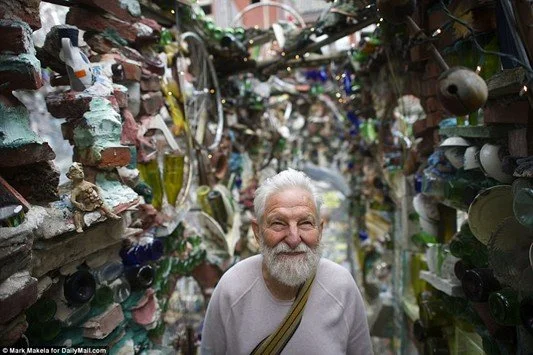
Farewell to Mr. Zagar
Philadelphia lost a defining voice this month. Isaiah Zagar, the mosaic artist whose work shaped the look and feel of Queen Village, Bella Vista, and South Street, passed away at 86 from complications related to heart failure and Parkinson’s Disease. He died at home, surrounded by family and friends, and leaves behind his wife Julia and their sons.
So much of his art is woven into Philadelphian’s everyday life. You don’t need to seek out his work. You simply walk through the neighborhood and there it is, catching the light on a brick wall or tucked into a narrow alley. His mosaics are part of the rhythm of these streets.
How he created scenes
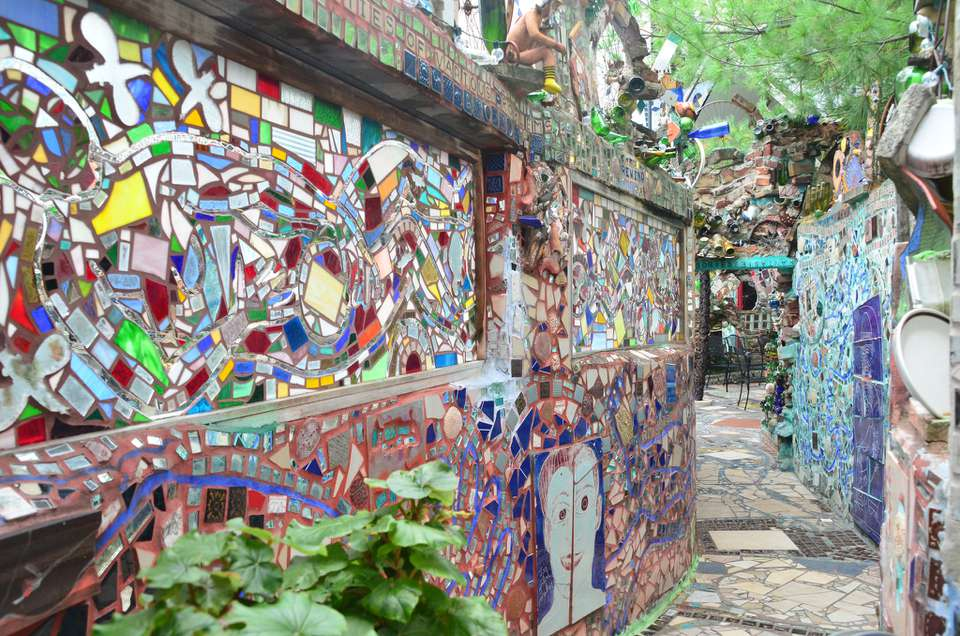
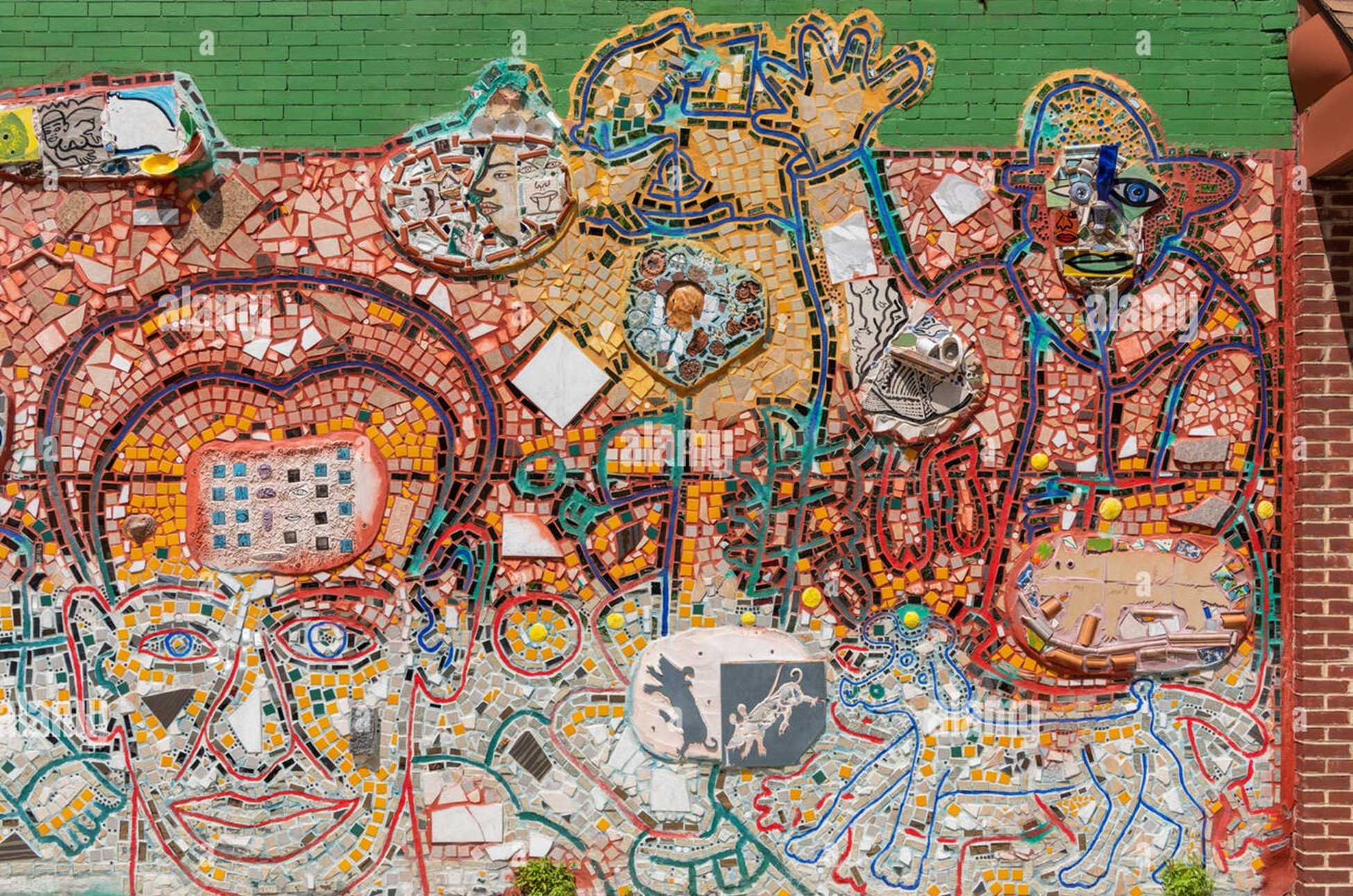
Isaiah didn’t work from detailed plans. His mosaics grew directly on the wall, piece by piece. He worked with tiles, mirrors, bottles, bicycle wheels, and folk art collected from around the world. He placed materials quickly and intuitively, building scenes from memory and repetition. Certain images appear throughout his work because they mattered to him: Julia as a maternal figure, himself as the man in the hat, dogs, names of artists he admired, and his motto, “Art is the center of the real world.”
This wasn’t symbolic in the academic sense. It was personal. His mosaics became a visual record of his life.
How he chose locations
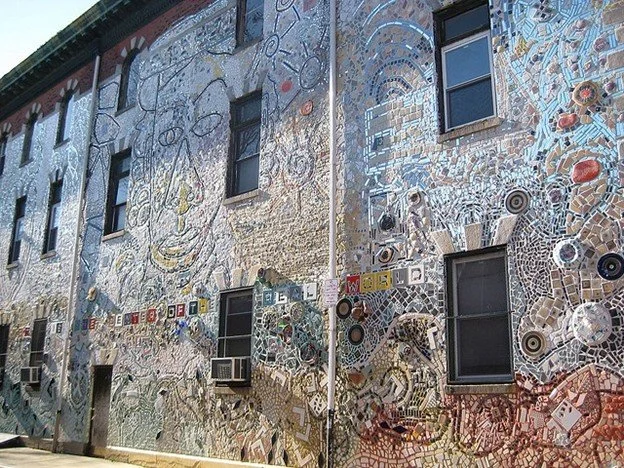
Isaiah often worked on buildings and spaces that had been overlooked, mosaicking vacant lots, derelict buildings, and abandoned corners of South Street. He and Julia helped revive the South Street neighborhood in the 1970s by renovating rundown properties and covering them in color. He worked where he lived, where he had permission, and sometimes where he did not have permission and where he felt art could transform a place.
How the Magic Gardens came to be
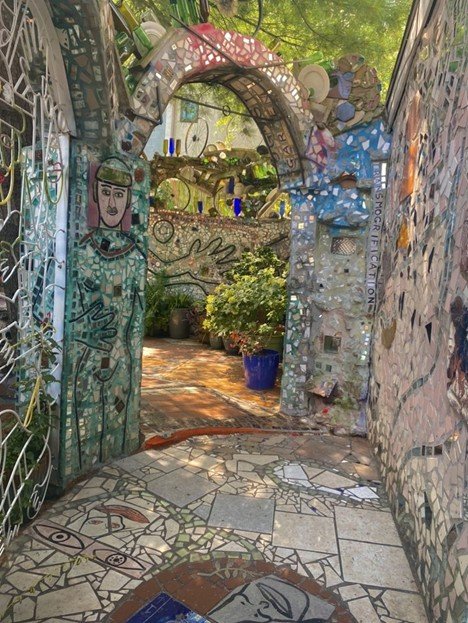
On the 1000 block of South Street you’ll find Philadelphia’s Magic Gardens, the sprawling indoor‑outdoor mosaic environment Isaiah built over many years, turning an empty lot into one of the city’s most iconic art spaces.
The Magic Gardens didn’t begin as a museum. It began as an empty, overgrown lot behind Isaiah’s studio on South Street. In the early 1990s, he received permission to “beautify” the space, and he did exactly that. He mosaicked the walls, the ground, the stairways, the tunnels, and the surrounding buildings. Over time, the site grew into a full art environment, a place where his life, influences, and travels were embedded into every surface.
When the lot was later threatened with development, the community rallied to save it. That effort led to the creation of the nonprofit Philadelphia’s Magic Gardens, which formally purchased the property in 2004. Today, the Magic Gardens Museum and the nearby Magic Gardens Studio are preserved as permanent homes for his work. They represent decades of labor, experimentation, and storytelling, and they remain the most immersive way to understand who he was as an artist. Philadelphia’s Magic Gardens maintains the most complete record of his mosaics, including those that still exist and those that have been demolished.
Where to find his other mosaics
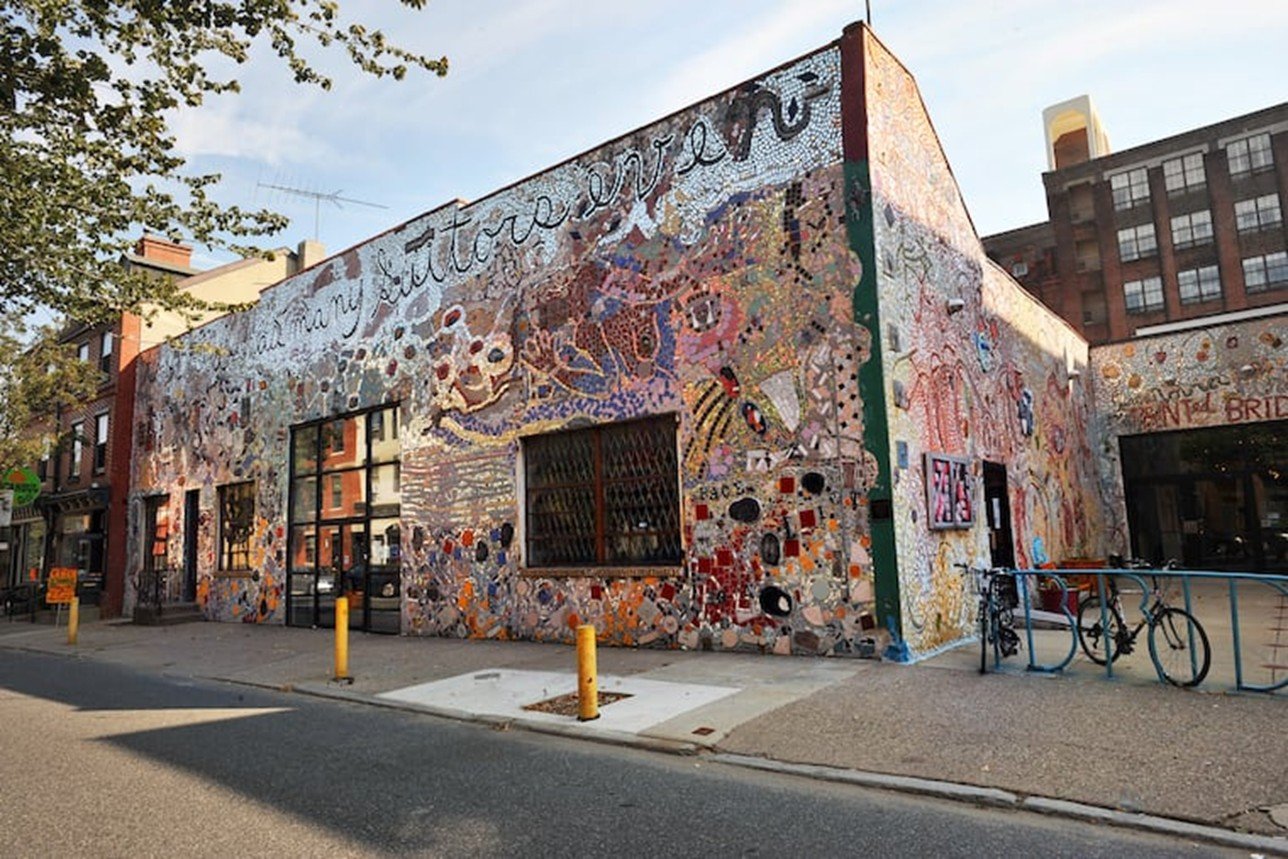
Isaiah’s work stretches far beyond the Magic Gardens. More than 50,000 square feet of public walls and surfaces in Philadelphia are covered in his mosaics, and he created more than 200 public works throughout the Western Hemisphere. The best way to explore them is through the Mosaic Mural Map, an interactive tool maintained by Philadelphia’s Magic Gardens.
Mosaic Mural Map
https://www.phillymagicgardens.org/about-philadelphias-magic-gardens/visit-from-home/mosaic-mural-map/
The map shows the full scope of his work, from the large, well‑known installations to the small pieces tucked into alleyways. It also documents mosaics that have been lost over time, including “The Skin of the Bride,” the 7,000 square foot mosaic that once covered the former Painted Bride Art Center at 230 Vine Street.
Walking through his neighborhoods
Queen Village and Bella Vista remain the heart of his public work. Dozens of mosaics are still visible on rowhomes, garages, alley walls, and unexpected surfaces. Some are large and unmistakable. Others are small and easy to miss unless you know where to look. They’re part of the neighborhood’s texture.
Why his work matters
Isaiah believed in transforming overlooked spaces. He believed in creating beauty out of broken materials. He believed in art as a way to survive difficult years and celebrate joyful ones. His mosaics changed the way people see the city, and they continue to shape the experience of walking through these neighborhoods.
His work will be here for generations, tucked into the corners of Queen Village and Bella Vista, shining across South Street, and filling the Magic Gardens with the stories he built into every surface. I feel grateful to have lived in Philadelphia while he was still creating, and even more grateful that the city he shaped is the one I get to share with others.
